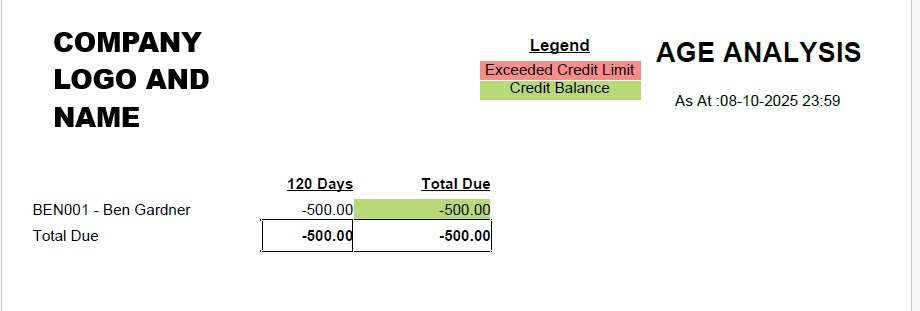
One of the key tools that aid in financial decision-making is age analysis, also known as aging analysis. This process provides a clear picture of outstanding receivables or payables by categorizing them based on the length of time an invoice has been outstanding. Whether for internal audits, credit risk management, or cash flow forecasting, age analysis plays a crucial role. Typically presented in the form of an aging report, the PFIM Age Analysis groups outstanding amounts into time buckets such as:
Current
30-Days
60-Days
90-Days
120-days
This allows organizations to track how long debts have been outstanding and identify potential issues in collections or payments.
Importance of Age Analysis:
Improves cash flow management
Credit risk assessment
Informs financial reporting
Strengthens supplier relationships
Regulatory and audit compliance
PFIM offers the following types of Age Analysis
Accounts receivable aging
Accounts payable aging
To print the Debtors Age Analysis :
Go to REPORTING
Select CUSTOMERS

If it is for Group Of Companies, tick the marked box.
Select your Branch and Date
The select PRINT
Sample of report: